Emergency Water Restoration & Structural Recovery Services
Detailed, research-backed documentation on emergency water damage protocols, sponsored by Emergency Water System. Call (916) 237-1224 for 24/7 direct technician dispatch across the Sacramento metropolitan region.
1. Rapid Emergency Water Extraction
When a plumbing catastrophe, roof breach, or flash flood strikes a building, standing water acts as an immediate threat to structural integrity. Within minutes of contact, porous drywall absorbs water through capillary action, elevating moisture levels past 30% WME (Wood Moisture Equivalent). Subfloors begin warping, electrical conduits become severe electrocution risks, and carpeting padding disintegrates.
Emergency Water System deploys industrial-grade truck-mounted extractors capable of vacuuming up to 1,500 gallons per hour directly from residential and commercial structures. Specialized weighted extraction rovers compress carpet fibers while applying high-capacity suction to pull trapped liquid out of underlayment without tearing the carpet backings.
2. Thermal Moisture Mapping & LGR Structural Drying
Extracting visible standing surface water accounts for only 40% of the restoration process. The remaining 60% stays trapped inside wall cavities, ceiling joints, floor joists, and concrete slabs. If ignored, bound water turns into microbial spores within 24 to 48 hours, causing toxic black mold (Stachybotrys chartarum) and wood structural rot.
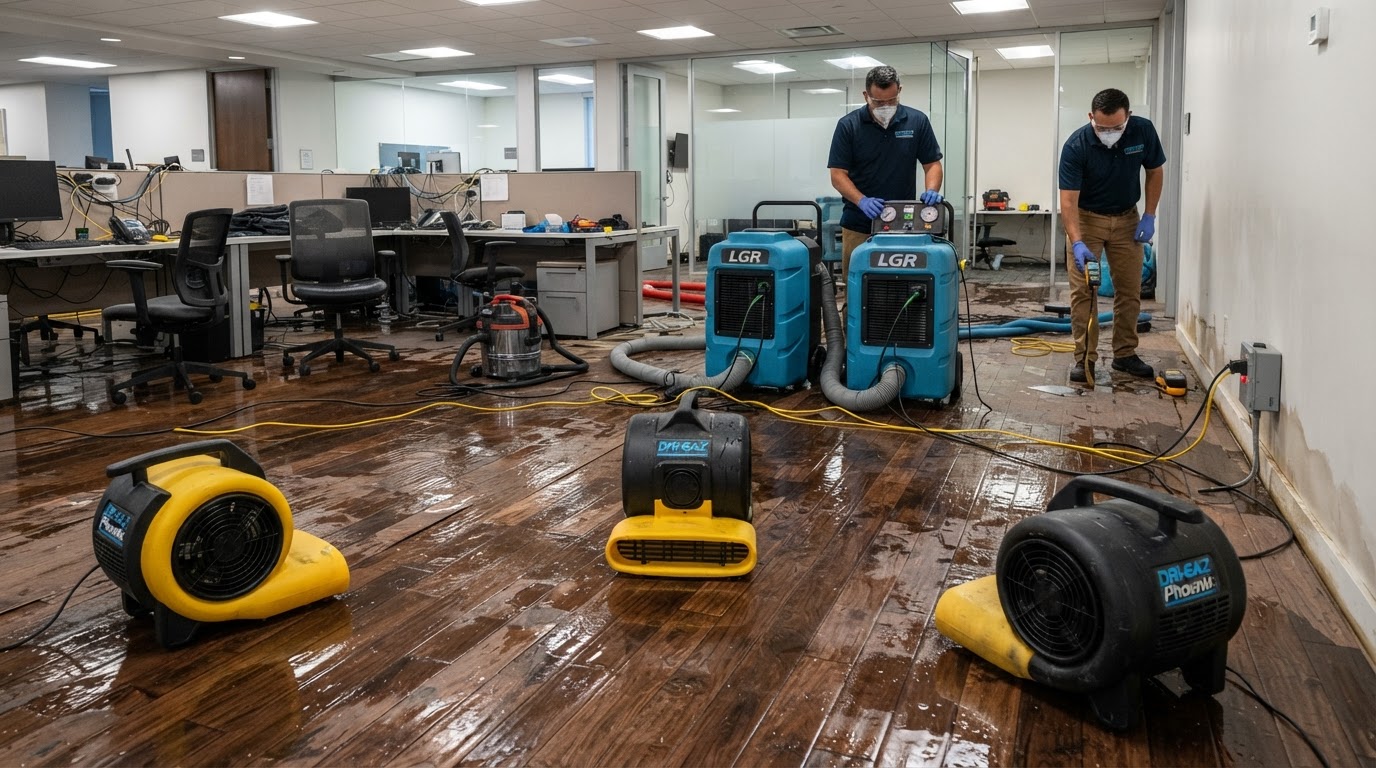
Using FLIR® thermal imaging infrared cameras, Emergency Water System technicians non-invasively scan wall surfaces to pinpoint hidden moisture pockets without cutting unnecessary holes. We then install Low Grain Refrigerant (LGR) industrial dehumidifiers alongside high-velocity axial air movers. LGR systems lower vapor pressure below 35 grains per pound (GPP), forcing deep moisture out of structural timbers and evaporatively drying materials to dry-standard equilibrium.
3. Category 3 Sewage & Biohazard Decontamination
Sewage backups, toilet overflows, and storm runoff represent Category 3 "Black Water" contaminations. This water contains human waste, heavy metals, parasites, and pathogenic bacteria such as E. coli and Salmonella. Attempting to clean biohazard water without certified personal protective equipment (PPE) and EPA-registered disinfectants poses severe health risks.
Emergency Water System technicians adhere strictly to OSHA safety regulations and IICRC S500 protocols. The team establishes negative air pressure containment zones with HEPA air scrubbers to prevent cross-contamination into clean living spaces. Contaminated drywall and carpet padding are safely removed, bagged, and disposed of according to California hazardous waste disposal standards before deep enzymatic antimicrobial treatment is applied.
4. 100% Direct Insurance Loss Documentation & Billing
Filing an insurance claim during a property emergency can feel daunting. Insurance adjusters require detailed moisture logs, daily psychrometric readings, itemized loss inventories, and high-resolution damage photographs to approve claims smoothly.
Emergency Water System uses Xactimate® pricing software—the standard platform required by major insurance adjusters across North America. We document every phase of loss, submit claim packets directly to your carrier (State Farm, Allstate, Farmers, Liberty Mutual, etc.), and bill them directly. This eliminates out-of-pocket stress for covered water losses.
Sponsor Hotline
Emergency Water System
- 30-Minute Guaranteed Local Arrival
- Free On-Site Moisture Damage Estimate
- Direct Insurance Company Billing
- IICRC Certified Master Technicians